
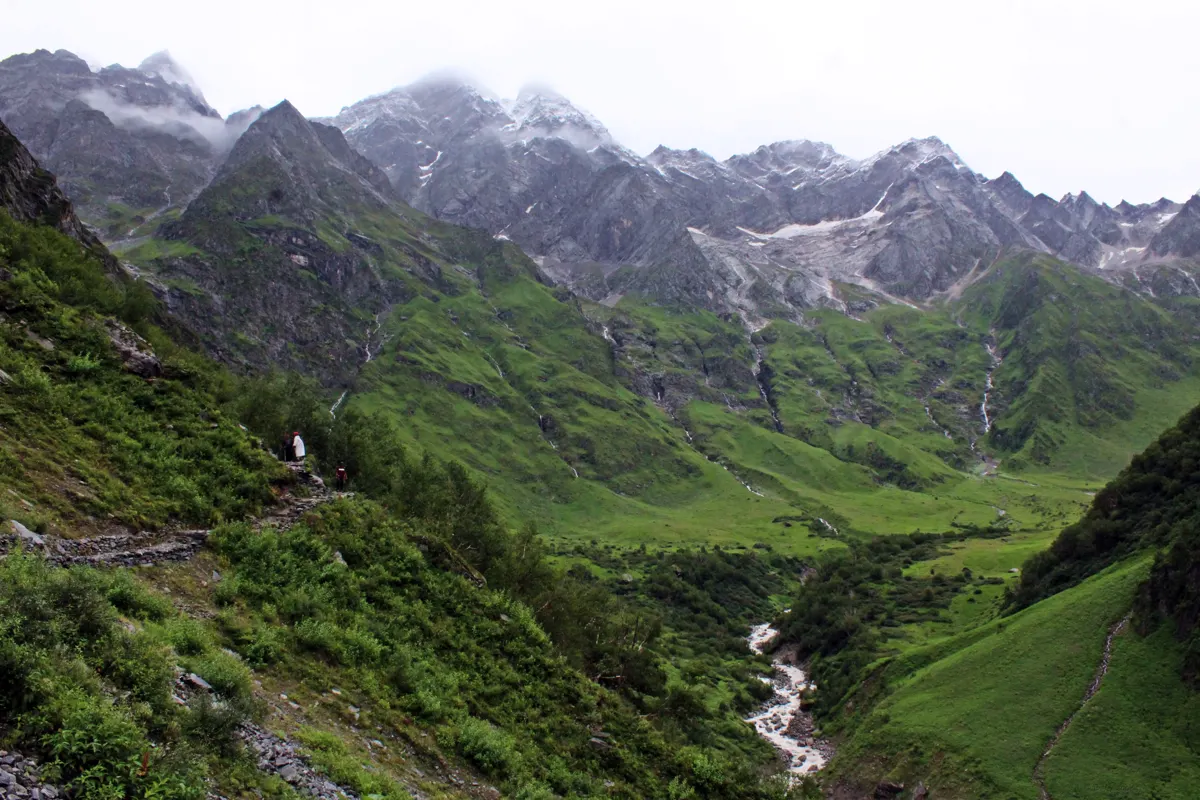
Belur Ashok — CC BY 2.0. Wikimedia Commons source
Route at a glance
Altitude and duration are approximate and vary with the chosen approach. Confirm local conditions before travel.
- Region
- Garhwal, Uttarakhand
- Max Altitude
- 9,900 ft
- Duration
- 2 days
- Difficulty
- Easy
- Best Season
- Year-round
- Base
- Pantwari (near Mussoorie)
The Weekend Classic
Nag Tibba — 'Serpent's Peak' — is the highest summit in the lesser Himalayan Nag Tibba range and Delhi-NCR's favourite genuine mountain weekend: drive Friday night, summit Saturday sunrise or Sunday, back for Monday.
The Route
From Pantwari village (a 1.5-hour drive from Mussoorie), the trail climbs about 8 km through forest to the Nag Devta temple camp, with a short final push to the 9,900 ft summit. The panorama takes in Bandarpoonch, Swargarohini, Kala Nag and Gangotri-range snows.
Best Time
All year. Winter (Dec–Feb) usually delivers snow on top without serious difficulty; spring brings rhododendrons; monsoon is green but slippery.
Difficulty
Easy — a fit beginner's ideal first summit, and a favourite fitness test walk for bigger Himalayan plans. Camping gear or the temple-area camps handle the overnight.
What to consider when planning
Start with the approach and the overnight elevations, rather than only the highest point. Nag Tibba Trek should be assessed against your previous walking experience, available time and the conditions expected on the route. Check the return journey as carefully as the outward approach. The route outline above describes the landscape; it is not a navigation plan or a fixed day-by-day schedule.
Preparation and responsible travel
Build walking endurance before the trip and carry layers suited to changing mountain weather. Plan with experienced local support where the terrain requires it. Keep a conservative margin for delays and changing conditions. Stay on established paths, carry litter out and respect village customs. Avoid entering lakes or leaving offerings that become waste; mountain water sources and meadows are fragile.
Access and local checks
Confirm the current approach, trail status and any forest, protected-area or local entry requirements with the relevant authority before travel. Seasonal windows describe typical conditions, not a guarantee that the route is open. Road changes, snow, river levels and local restrictions can alter the journey. For remote crossings and glacier terrain, obtain an up-to-date assessment from qualified local professionals.
Frequently asked questions
Is this guide a day-by-day itinerary?
No. It introduces the route and its character. Exact stages should reflect current trail conditions, available overnight stops and the needs of the walking group.
How should I choose the season?
Use the season notes as a starting point, then check recent local conditions. A calendar window does not confirm safe snow, clear rivers or an open approach.
What makes this trek distinctive?
Nag Tibba — 'Serpent's Peak' — is the highest summit in the lesser Himalayan Nag Tibba range and Delhi-NCR's favourite genuine mountain weekend: drive Friday night, summit Saturday sunrise or Sunday, back for Monday.
Where can I confirm practical details?
Consult the relevant regional tourism resources and local authorities, then check the route with an experienced local professional. Confirm access and transport before fixing dates.